|
|
|
|
Welcome to this issue of At the Intersections, where investigations connect across physical structures, human collaboration, and the wider cosmos. This week brings together research on the built environment, linking resource reuse in construction to the structural hazards of tornado winds. Looking outward, separate studies consider deep space, observing how light behaves around supermassive black holes and how carbon molecules take shape near aging stars. Finally, the focus turns to methods of care and partnership, examining clinical monitoring for children with severe brain injuries alongside the distribution of power between academic teams and community groups.
|
|
|
|
|
|
|
|
|
|
|
|
Where are tornadoes most likely to strike, and how strong are their winds?
|
|
|
Designing safe structures across Canada requires knowing the likelihood and strength of local tornado winds. Researchers analyzed recent records of tornado paths, storm intensities, lightning strikes, and population counts to create new hazard maps.
|
|
Liu, Y., Zhou, W., Hong, H., Sills, D., & Kopp, G. (2026). Mapping extreme Canadian tornado wind speed for structural and cladding design. Journal of Wind Engineering and Industrial Aerodynamics, 278, 106619. https://doi.org/10.1016/j.jweia.2026.106619
 Gregory Kopp Gregory Kopp
|
|
|
|
|
How can researchers and community groups build fair partnerships?
|
|
|
Research partnerships between academic teams and community groups often face power imbalances, unclear roles, and communication barriers. To address these issues, the researchers created and applied guiding principles for inclusive collaboration and reviewed the challenges that arose.
|
|
Le Ber, M. J., Fryday-Field, K., van Roessel, L., Cram, J., Dhaliwal, J., El-Ayoubi, A., Kothari, A., Kteily-Hawa, R., Ochoa, L., Pardhan, S., & Tarawalley, M. (2026). How we embraced methodological and ethical challenges in our community–academic partnered research about equity in organizational leadership. Evidence & Policy, 1-13. https://doi.org/10.1332/17442648y2026d000000106
Anita Kothari
|
|
|
|
|
|
|
|
|
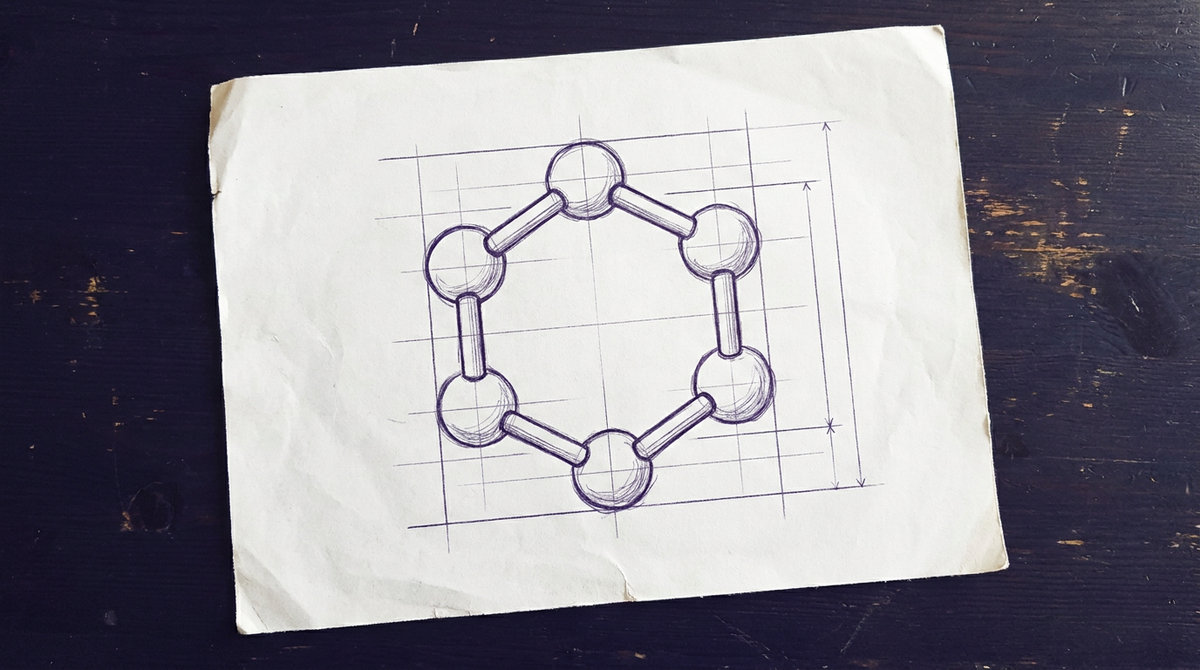
How do dying stars build complex carbon molecules?
|
|
|
Scientists seek to understand how complex carbon-based molecules form in the space surrounding aging stars. To investigate, researchers observed an aging, carbon-rich astronomical object using an infrared instrument on the James Webb Space Telescope.
|
|
Li, J., García-Hernández, D. A., Manchado, A., Das, D., Cami, J., Peeters, E., Sloan, G. C., Aringer, B., Bernard-Salas, J., Bhatt, C., Clark, N., Dinerstein, H. L., Gómez-Muñoz, M. A., Kraemer, K. E., Matsuura, M., Sahai, R., Sterling, N. C., Volk, K., Wahlgren, G. M., & Zijlstra, A. A. (2026). The JWST Proto-PAH Project: Detection of the Methyl Radical CH 3 in the Highly Evolved C-rich Object SMP LMC 011. The Astrophysical Journal Letters, 1009(2), L47. https://doi.org/10.3847/2041-8213/aea794
Jan Cami
|
|
|
|
|
Upcoming events
|
Western Complex Systems Conference
Mar 18, 2027 · 9:30 AM EDT
The purpose of the Western Complex Systems Conference is foster interdisciplinary collaboration as we explore the application of complexity theory and systems thinking across disci
RSVP →
|
|
|
|
|
Listen to our podcast
|
|
|
|
|
|
|
|
|
|
|
|

Complex Adaptive Systems (CAS) Lab
Western University
1151 Richmond Street, London, Ontario N6A 3K7, CA
caslab@uwo.ca
|
|
|
|