|
|
|
|
Welcome to this week’s issue of At the Intersections. This edition connects investigations into biological and cognitive processes with observations of frontline community care. We look at the circulation of fluid within the brain and the neural systems engaged by music. We also review clinical approaches to evaluating trauma in adults alongside societal conditions linked to youth loneliness and communication. Finally, we examine direct service delivery, following community nurses conducting rapid diagnostic tests and the daily realities of charitable food services for people experiencing homelessness.
|
|
|
|
Does fluid flow in the brain differ depending on when schizophrenia begins?
|

|
|
Schizophrenia varies widely among people, and biological mechanisms may differ depending on whether the illness begins during youth or adulthood. Researchers used brain scans to track fluid movement around blood vessels in 195 first-episode schizophrenia patients and 191 healthy individuals.
|
|
Long, X., Zhang, M., Cheng, P., Wang, F., Wang, Y., Liu, X., Huang, W., Chen, G., Liu, Z., Yang, J., & Palaniyappan, L. (2026). Distinct patterns of putative glymphatic function between early-onset and adult-onset first-episode schizophrenia: Evidence from DTI-ALPS. Schizophrenia Research, 297, 628-636. https://doi.org/10.1016/j.schres.2026.09.024
 Lena Palaniyappan Lena Palaniyappan
|
|
|
|
|
|
|
|
|
How do charitable food services balance care and control for people experiencing homelessness?
|

|
|
Charitable food services for people experiencing homelessness face tensions when delivering care within constrained systems. Researchers observed daily practices and interviewed service providers and organizational leaders across two Canadian cities.
|
|
Easton, C., Oudshoorn, A., Smith‐Carrier, T., Forchuk, C., & Marshall, C. A. (2026). “It Is More Than Just Food, We Need To Be Human Beings Together”: Service Provider and Leader Perspectives on Charitable Food Services for Persons Experiencing Homelessness. World Food Policy, 12(2). https://doi.org/10.1002/wfp2.70035
Tracy Smith-Carrier
|
|
|
|
|
Can nurses accurately run a rapid hepatitis test using only written instructions?
|

|
|
It is unclear whether community nurses can accurately perform rapid hepatitis C finger-prick tests using only the provided written instructions. Researchers observed Ontario community nurses read the instructions, take a knowledge quiz, perform the test, and complete surveys about the process.
|
|
Keylis, K., Chen, M., St Pierre, A., Kozak, R., Barnett, T., Canani, F., Sugden, S., & Biondi, M. (2026). Pilot study of the Xpert hepatitis C virus VL fingerstick assay in the intended use setting. Journal of the American Association of Nurse Practitioners. https://doi.org/10.1097/jxx.0000000000001376
Mia Biondi
|
|
|
|
|
How should healthcare providers assess trauma and related conditions in adults?
|

|
|
Traumatic events and stress are common among the general public and specific workers, creating a need for routine healthcare evaluations. The authors reviewed professional practice guidelines and two example patient cases to study trauma assessment in adults.
|
|
Frewen, P., Pong, T., Morris, C., Bao, Z., & Bailey, T. (2026). On the Assessment of Potentially Traumatic Events and Posttraumatic Stress in Adults. Journal of Health Service Psychology. https://doi.org/10.1007/s42843-026-00167-5
Paul Frewen
|
|
|
|
|
How does music therapy work in the brain?
|
|
|
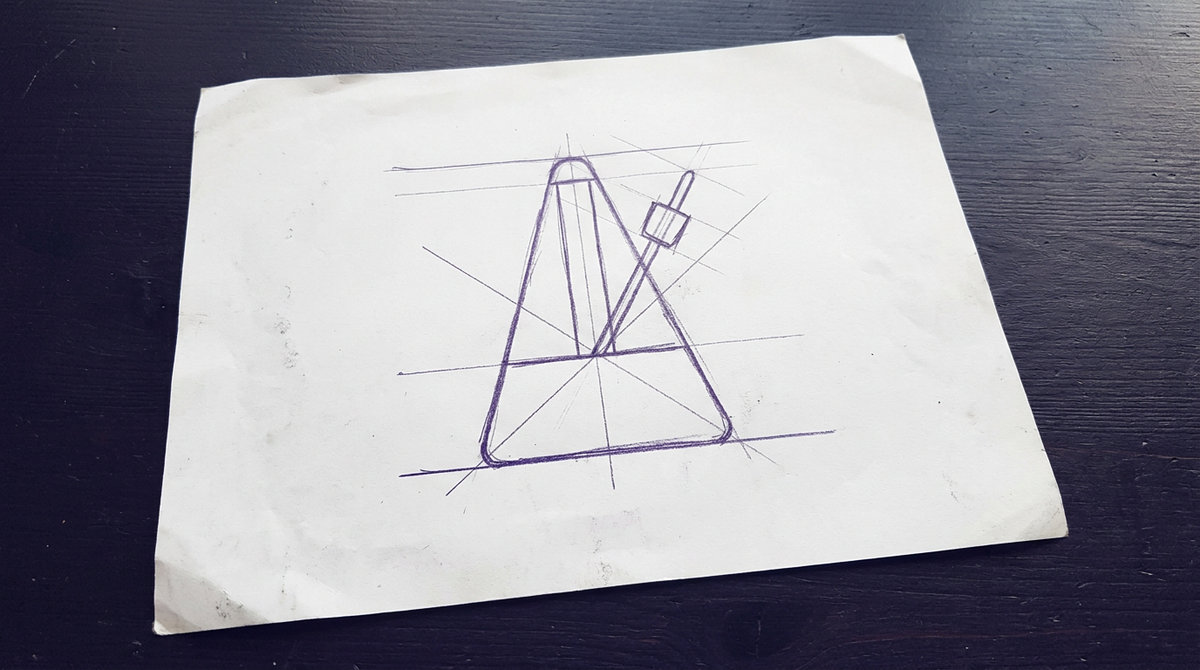
Scientists do not fully understand how music therapies work in the brain to treat thinking, movement, and language difficulties. The researchers built a model combining the brain's hearing, reward, and movement systems to examine how different music therapies use them.
|
|
Loui, P., Peelle, J. E., & Grahn, J. A. (2026). Music-Based Interventions for Cognition and Brain Health: the ARM framework. Center for Open Science. https://doi.org/10.31234/osf.io/2mfzk_v1
Jessica Grahn
|
|
|
|
|
Upcoming events
|
Western Complex Systems Conference
Mar 25, 2027 · 9:30 AM EDT
The purpose of the Western Complex Systems Conference is foster interdisciplinary collaboration as we explore the application of complexity theory and systems thinking across disci
RSVP →
|
|
|
|
|
Listen to our podcast
|
|
|
|
|
|
|
|
|
|
|
|

Complex Adaptive Systems (CAS) Lab
Western University
1151 Richmond Street, London, Ontario N6A 3K7, CA
caslab@uwo.ca
|
|
|
|