|
|

|
|
Welcome to this issue of At the Intersections. This edition gathers research linking observation across distinct environments, from peatland soils to stellar emissions, and from operating rooms to human speech. Field studies catalog the small organisms living within peat bogs across developmental stages. In medicine, investigations track how surgical trainees apply anatomical knowledge during procedures and how healthcare teams adapt to shifting demands. Concurrently, computational models interpret the infrared signatures produced by dying stars and analyze recordings to detect symptoms in patients with schizophrenia spectrum disorders. Together, these reports demonstrate how researchers map processes occurring across physical, biological, and clinical settings.
|
|
|
|
Can tiny carbon particles explain the light observed from dying stars?
|

|
|
Scientists have not identified the chemical structures that produce specific infrared light patterns around certain carbon-rich, dying stars. Researchers modeled tiny carbon and hydrogen particles with computer simulations and compared their calculated light signatures to space telescope observations.
|
|
Ricca, A., Sloan, G. C., Peeters, E., Cami, J., Clark, N., Matsuura, M., Sahai, R., Bernard-Salas, J., García-Hernández, D. A., Li, J., & Bhatt, C. (2026). The JWST Proto-PAH Project. Computational Modeling of the Emission Carriers. The Astrophysical Journal, 1011(2), 189. https://doi.org/10.3847/1538-4357/aeacd8
 Jan Cami
|
|
|
|
|
|
|
|
|
|
|
|
|
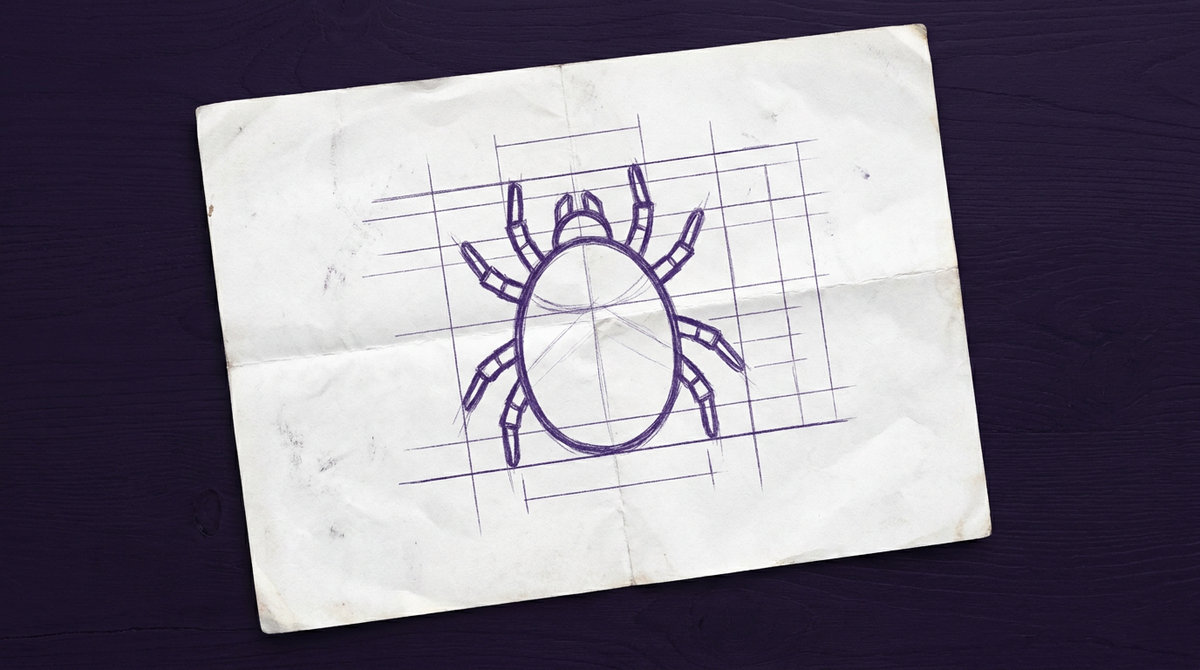
Which soil mites live in peatlands?
|
|
|
Researchers lack a list of oribatid mites, a group of soil animals, living in peatlands across the United States. To build this list, the scientists collected peat-soil samples from a Minnesota bog, examined museum specimens, and reviewed published research.
|
|
Barreto, C., & Lindo, Z. (2026). Oribatid mites from peatlands in the United States. Acarologia, 66(Suppl), 115-115. https://doi.org/10.24349/h8ms-3xlp
Zoë Lindo
|
|
|
|
|
How do young mites contribute to species diversity in peatland soils?
|
|
|
Scientists struggle to measure soil mite diversity because young mites look completely different from adults and are difficult to identify. Researchers collected mites from six Canadian peatlands and sequenced their DNA to match the young mites with adults.
|
|
Conceição, P., & Lindo, Z. (2026). Hidden diversity: The contribution of juveniles to the species and genetic diversity of mesostigmatid mites in peatlands using DNA barcoding. Acarologia, 66(Suppl), 111-111. https://doi.org/10.24349/6c4q-tbdm
Zoë Lindo
|
|
|
|
|
Can computers predict schizophrenia symptoms from speech?
|

|
|
Tracking mental state changes and relapse in patients with schizophrenia spectrum disorders typically relies on clinician ratings rather than automated speech assessments. Researchers tested sixteen computer programs on thousands of speech recordings from 453 patients across ten countries to predict eight relapse-related symptoms.
|
|
He, R., Kirdun, M., Palominos, C., Orejudo, L. N., Barthelemy, S., Bhola, S., Ciampelli, S., Decker, A., Demirlek, C., Fusaroli, R., García-Molina, J. T., Gimenez, G., Hüppi, R., Koelkebeck, K., Lecomte, A., Qiu, R., Simonsen, A., Tourneur, V., Verim, B., ... Wang, H. (2026). Predicting PANSS symptoms in schizophrenia spectrum disorders using speech only: an international, multi-centre, computational secondary analysis across multiple languages. eClinicalMedicine, 101, 104265. https://doi.org/10.1016/j.eclinm.2026.104265
Lena Palaniyappan
|
|
|
|
|
Upcoming events
|
Western Complex Systems Conference
Mar 25, 2027 · 9:30 AM EDT
The purpose of the Western Complex Systems Conference is foster interdisciplinary collaboration as we explore the application of complexity theory and systems thinking across disci
RSVP →
|
|
|
|
|
Listen to our podcast
|
|
|
|
|
|
|
|
|
|
|
|

Complex Adaptive Systems (CAS) Lab
Western University
1151 Richmond Street, London, Ontario N6A 3K7, CA
caslab@uwo.ca
|
|
|
|