|
|
|
|
Welcome to this week’s issue of At the Intersections. This edition brings together investigations into hidden signals and structured systems, exploring how standard cameras register physiological markers of deception, how the brain tracks sound that exists only in the imagination, and how computational frameworks combine theory and clinical data to forecast disruptions in reality. In parallel, the focus turns to how institutions manage uncertainty, examining the role of intellectual humility in business education, statistical methods for identifying the mechanisms behind workplace policies, and the transition of global strategies for mitigating flood risks.
|
|
|
|
Can a standard video camera detect whether someone is lying?
|

|
|
Detecting lies during video calls currently requires either specialized sensing equipment or regular cameras that offer limited accuracy. To address this, researchers built a system that tracks movement, facial temperature changes, and heart activity using standard color video.
|
|
Dai, D., Wang, H., Li, W., Mei, Z., Wang, B., Tong, J., & Feng, Y. (2026). Learning Video-Derived Behavioral and Physiological Representations for Automated Deception Detection. Proceedings of the 35th ACM International Conference on Information and Knowledge Management, 920-931. https://doi.org/10.1145/3799682.3840909
 Boyu Wang
|
|
|
|
|
|
|
|
|
Does brain activity track an imagined musical beat?
|

|
|
Scientists struggle to separate brain activity caused directly by sounds from brain signals that reflect a person consciously imagining a musical beat. Researchers conducted thirteen experiments where people imagined beats while hearing regular sounds and completed tasks to test their conscious perception.
|
|
Nave, K. M., Hannon, E. E., Snyder, J. S., Alexandrov, E., Allen, S. C., Barbosa, F., Breen, M., Celma-Miralles, A., Chain, T., de Leeuw, J. R., Ferreira-Santos, F., Fitzroy, A. B., Geng, N., Gilmore, S. A., Gordon, R. L., Grahn, J. A., Har-Shai Yahav, P., Holm, K., Huettig, F., ... Keitel, A. (2026). Registered Report: Replication and Extension of Nozaradan et al. (2011). Advances in Methods and Practices in Psychological Science, 9(4). https://doi.org/10.1177/25152459261443491
Jessica Grahn
|
|
|
|
|
|
|
|
|
How has flood management changed since 2000 to handle rising risks?
|

|
|
Flooding damages communities and affects nearly two billion people worldwide, while changing climates, population growth, and land development intensify these disasters. The researchers reviewed scientific studies, global guidelines, and international conference records on flood management methods from the year 2000 to the present.
|
|
Simonovic, S. P. (2026). Flood management in transition: A systems-based review of traditional practices, modern approaches, and future strategic directions. The Solutions, 1, 100003. https://doi.org/10.1016/j.sol.2026.100003
Slobodan Simonovic
|
|
|
|
|
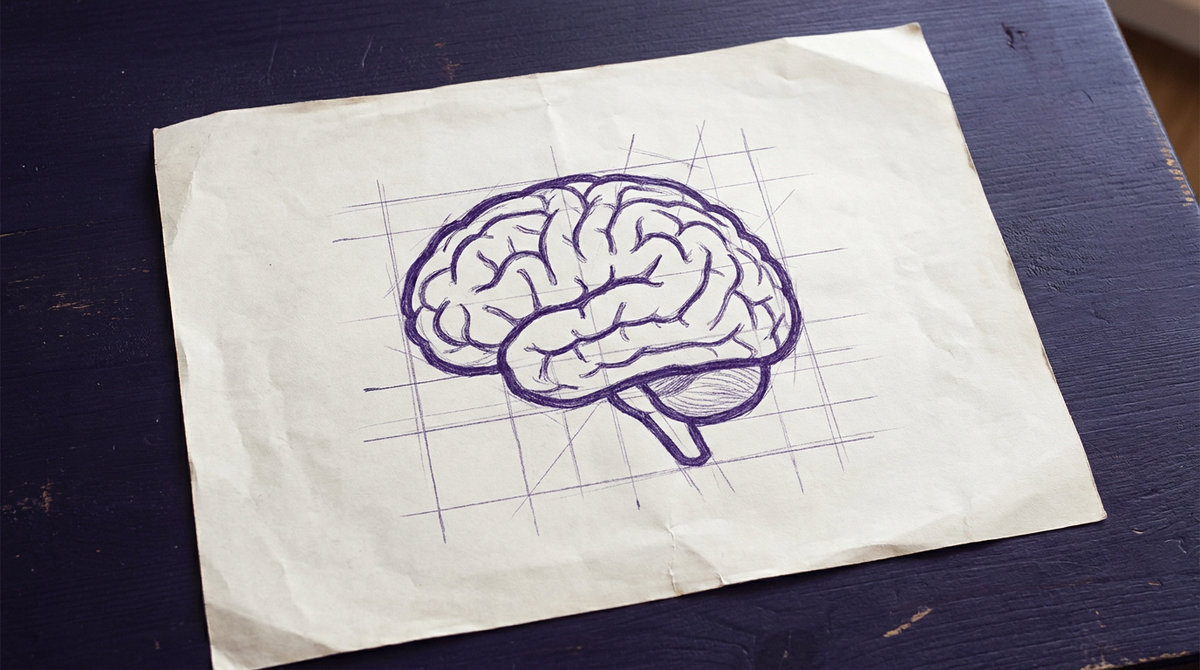
Can combining theory and data help predict when psychosis begins?
|
|
|
Predicting the onset of psychosis, a condition disrupting reality, is limited because explanatory symptom models operate separately from data-based clinical tools. Using psychosis prediction as a case study, the researchers proposed a framework where computer models, observed data, and prediction tools refine each other.
|
|
Mombelli, S., Zanjani, S. R., Godhwani, K., Voppel, A., Aiyaar, A., Zamorano, T., Friesen, T., Choucroun, A., Guigon, V., Charpentier, C. J., Knolle, F., Smith, R., Waldispuhl, J., Mikus, N., Mathys, C., Diaconescu, A. O., Gilleen, J., Palaniyappan, L., Shah, J., ... Powers, A. (2026). Integrating theory-driven and data-driven computational psychiatry. Journal of Psychiatry and Neuroscience, 51, 1-13. https://doi.org/10.1139/jpn-2026-0082
Lena Palaniyappan
|
|
|
|
|
Upcoming events
|
Western Complex Systems Conference
Mar 25, 2027 · 9:30 AM EDT
The purpose of the Western Complex Systems Conference is foster interdisciplinary collaboration as we explore the application of complexity theory and systems thinking across disci
RSVP →
|
|
|
|
|
Listen to our podcast
|
|
|
|
|
|
|
|
|
|
|
|

Complex Adaptive Systems (CAS) Lab
Western University
1151 Richmond Street, London, Ontario N6A 3K7, CA
caslab@uwo.ca
|
|
|
|